
Elemi Gum


Product Details
| Type | Class I, Class II, Class III |
|---|---|
| Uses | Essential oils, Lacquers and varnishes, Plasters and ointment manufacturing, Pharmaceutical purposes, Cosmetic ingredient |
Supplier Info

Relemix Enterprises
-
National Rd., Barangay Balungay, Alabat, Quezon, 4333
Product Description
The term “elemi” has been applied in the past to a large number of oleoresins from a variety of geographic and botanical sources. Nowadays, however, the term is almost always used to describe the product from the Philippines, Manila elemi, which is the only one that is traded internationally.
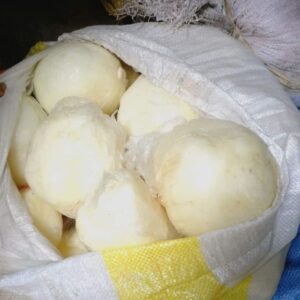
Manila elemi is the soft, fragrant oleoresin obtained from the trunk of Canarium species, the most important of which is C. luzonicum. When fresh, the oleoresin is oily and pale yellow or greenish in colour, resembling crystallized honey in consistency, but on exposure to air it may harden but the quality does not diminished. It has a balsamic odour and a spicy, rather bitter taste.
Three classes of Manila elemi exist for domestic and export trade, although the designations are not always adhered to: class I (within which there are two grades), class II (two grades) and class III (one grade). Class I represents the palest material (the two grades being clean or non-clean), class II a more yellowish material, and class III a mixture of I and II. The softer grades are the higher quality, reflecting a higher essential oil content compared with the harder grades.
Canarium is a genus of big shade trees in the Old World tropics, chiefly Malaysia to the Philippines, but extending to Papua New Guinea and other Pacific islands, which are often highly prized for their edible fruits and nuts. C. luzonicum is a large tree up to 35 m tall and 1 m in diameter. It is found in primary forests at low and medium elevations in Luzon and some other islands of the Philippines. C. ovatum is a large, buttressed tree, reaching up to 20 m in height, and native to the Philippines.
Uses:
In the forest areas where it is collected, it is rolled in leaves and used for lighting purposes, but in commerce it is used mainly by the fragrance industry after the process of steam distillation which produces the essential oil. It still finds occasional use as an ingredient in lacquers and varnishes, where it gives toughness and elasticity to the dried film.
Elemi is also a stimulant resin and is used in the manufacture of plasters and ointments. It is also now being used for pharmaceutical purposes, and cosmetic ingredient.
Collection & Processing:
- To collect the gum, tappers used a sharp “bolo” and a wooden mallet to make a series of cuts up the trunk of the tree, each cut resulting in removal of bark and exudation of the oleoresin. The diameter of the trees tapped was in the range 20-60 cm. The initial strip of bark which is removed should be 2 cm high and not more than 30 cm wide.
Subsequent strips (1 cm high) are removed at approximately two-day intervals above and adjacent to the previous one, and tapping is continued as high as the person can reach. A second face may be opened close to the first, providing at least one third of the circumference of the bark of the tree is left intact.
2. The exuded, sticky mass is collected at two-week intervals, usually by scraping it off the tree with a blunt-tipped bolo or stick.
3. After transport to the towns, elemi, which is destined for export, is cleaned by manual removal of as much bark and other forest debris as possible. The cleaned resin is then packed in polythene-lined wooden boxes.
4. Tapping is usually a year-round activity, but resin flow is at its greatest during the rainy season and little, if any, may be collected in the dry months.
5. The crude oleoresin contains a high proportion of essential oil, around 25%, and this can be recovered by the simple process of steam distillation. The freshly distilled oil is liable to resinify and polymerize on standing, and for this reason distillation is normally carried out in the importing country, where it can be formulated soon after preparation.
6.A resinoid is also sometimes prepared by solvent extraction of the crude elemi.
Product Reviews
From The Same Supplier
-
Elemi Gum
by Relemix EnterprisesThe source of Manila elemi occurs on other Pacific islands, but the Philippines is the only source of internationally traded elemi.